The Hidden Side of Furniture: Why What's Inside Matters More Than What's Outside
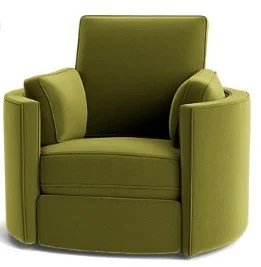
When shopping for furniture, it's easy to fall in love with what you can see.
The fabric catches your eye. The color fits your home perfectly. The silhouette feels current and stylish. You sit down for a few minutes in the showroom, it feels comfortable enough, and before long it's on its way to your home.
But the truth is, the most important part of any upholstered piece is the part you'll never see.
As upholsterers, we spend our days looking beneath the fabric. Every sofa, chair, banquette, and cushion that enters our workroom tells a story. Once the upholstery is removed, we're able to see how the furniture was truly built—and the differences can be remarkable.
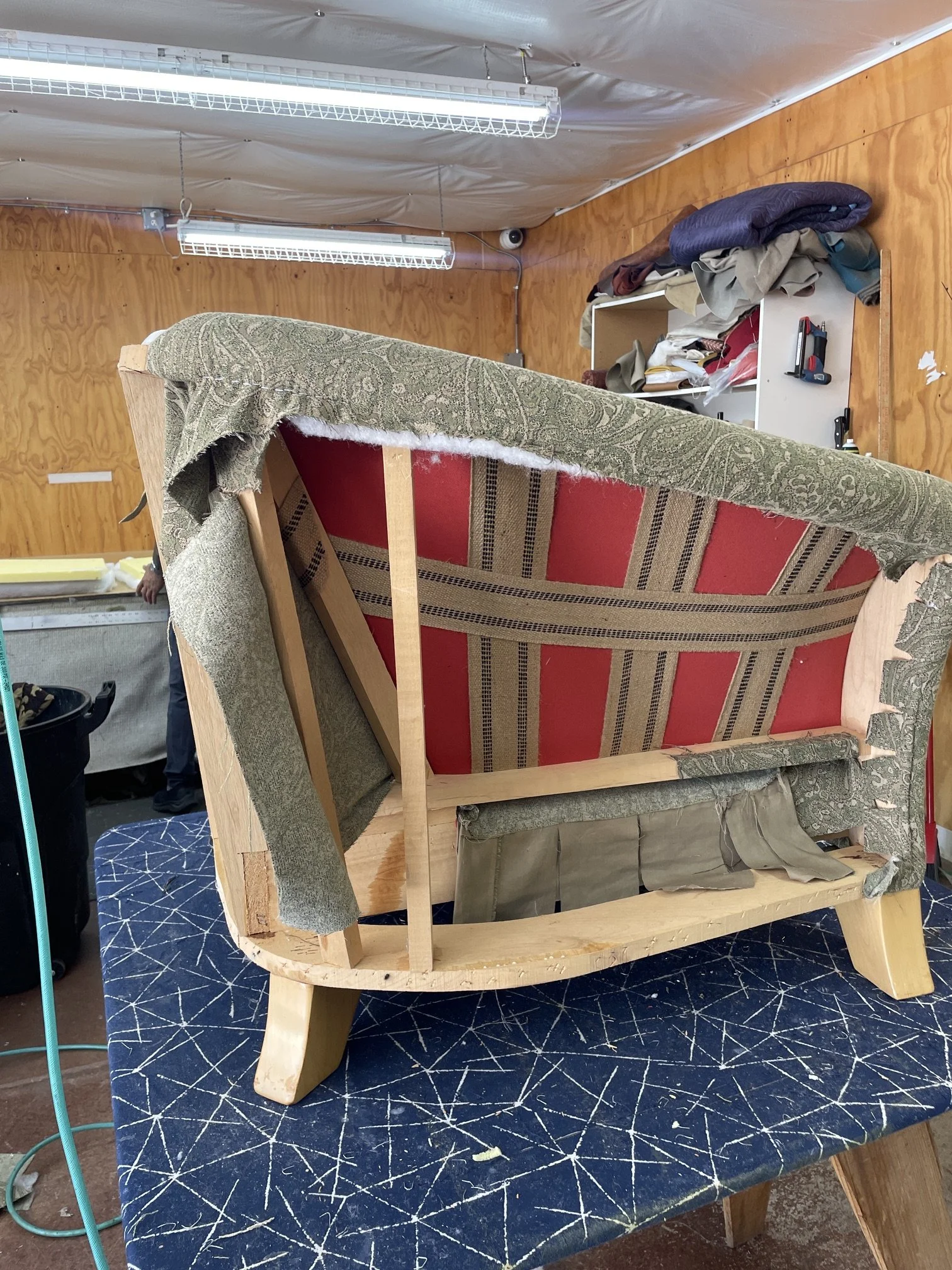
Some pieces reveal solid hardwood frames, carefully crafted joinery, durable spring systems, and construction methods that have lasted for decades. Others reveal lightweight engineered materials, minimal reinforcement, lower-density foams, and construction designed to meet a price point rather than stand the test of time.
Understanding what's hidden beneath the fabric can help homeowners make better purchasing decisions and help designers specify furniture that performs beautifully for years to come.
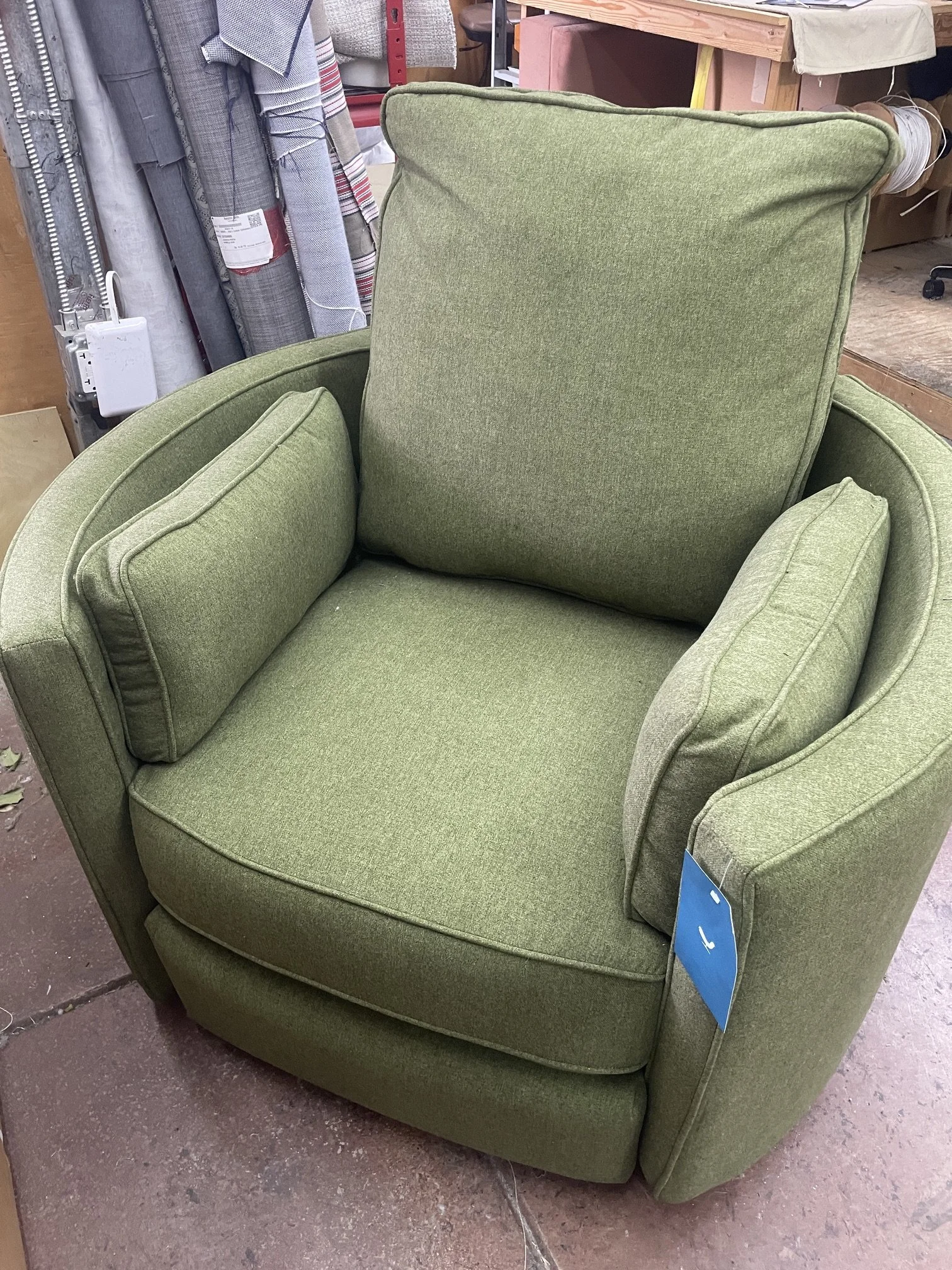
Recently purchased recliner. Looks modern and cool.
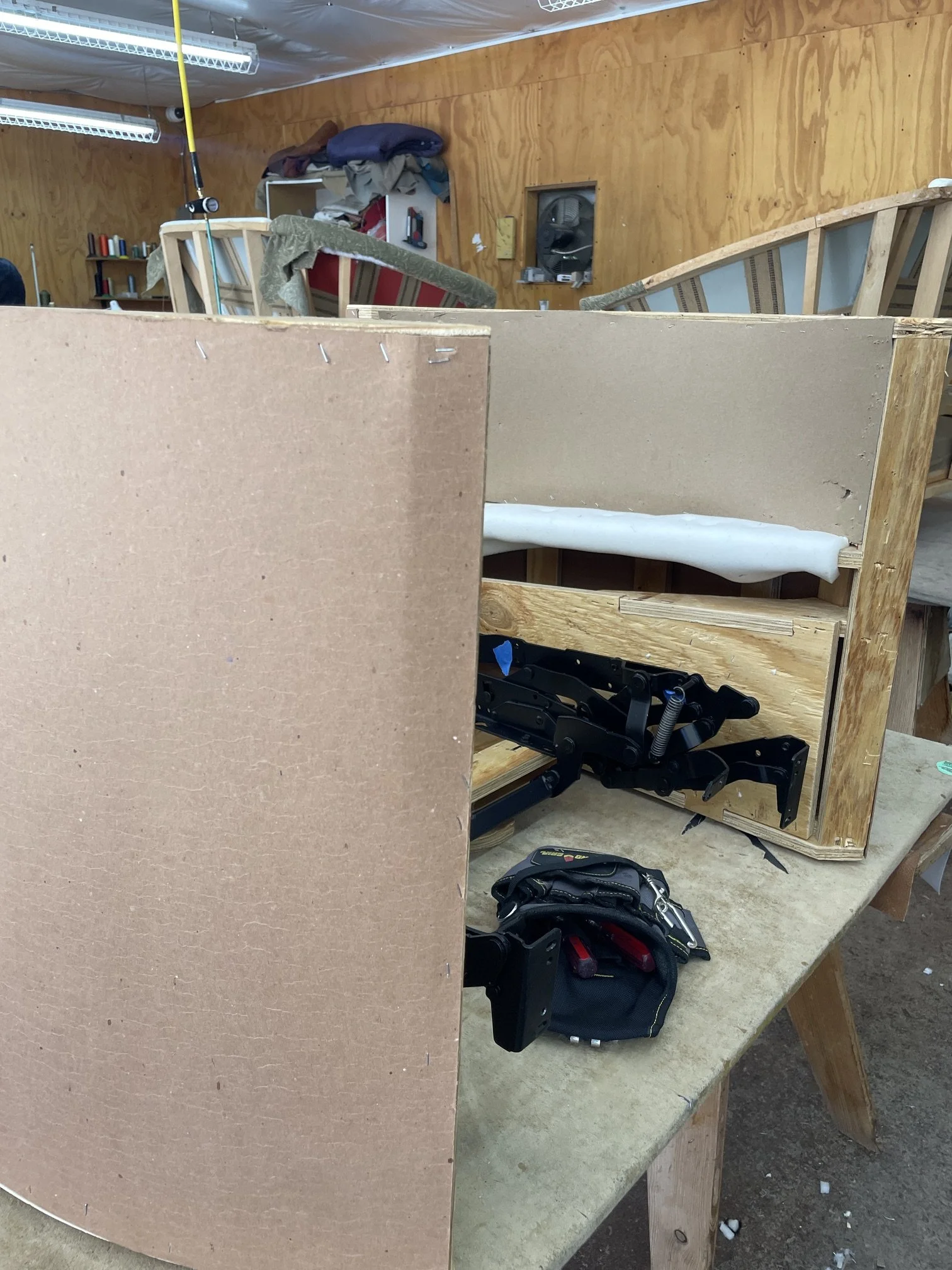
However, the frame and construction are quite poor and very low quality. ‘
Yes, that’s cardboard…
Furniture Isn't Built the Same Way It Once Was
One of the biggest changes we've seen over the years is how furniture is manufactured.
Decades ago, many sofas and chairs were built with the expectation that they would eventually be reupholstered. Solid hardwood frames, reinforced corner blocks, quality spring systems, and replaceable cushions meant a well-built piece could last for generations.
Today's furniture market is very different.
Consumers expect furniture to arrive quickly, styles change more rapidly than ever, and manufacturers face constant pressure to reduce costs, shipping weight, and production time.
As a result, many mass-produced pieces now utilize lighter materials, engineered wood products, thinner framing members, simplified joinery, and lower-density foam.
This doesn't mean every new piece is poorly made. There are still exceptional manufacturers producing heirloom-quality furniture with remarkable craftsmanship.
However, quality construction has become increasingly valuable because it is becoming less common in everyday retail furniture.
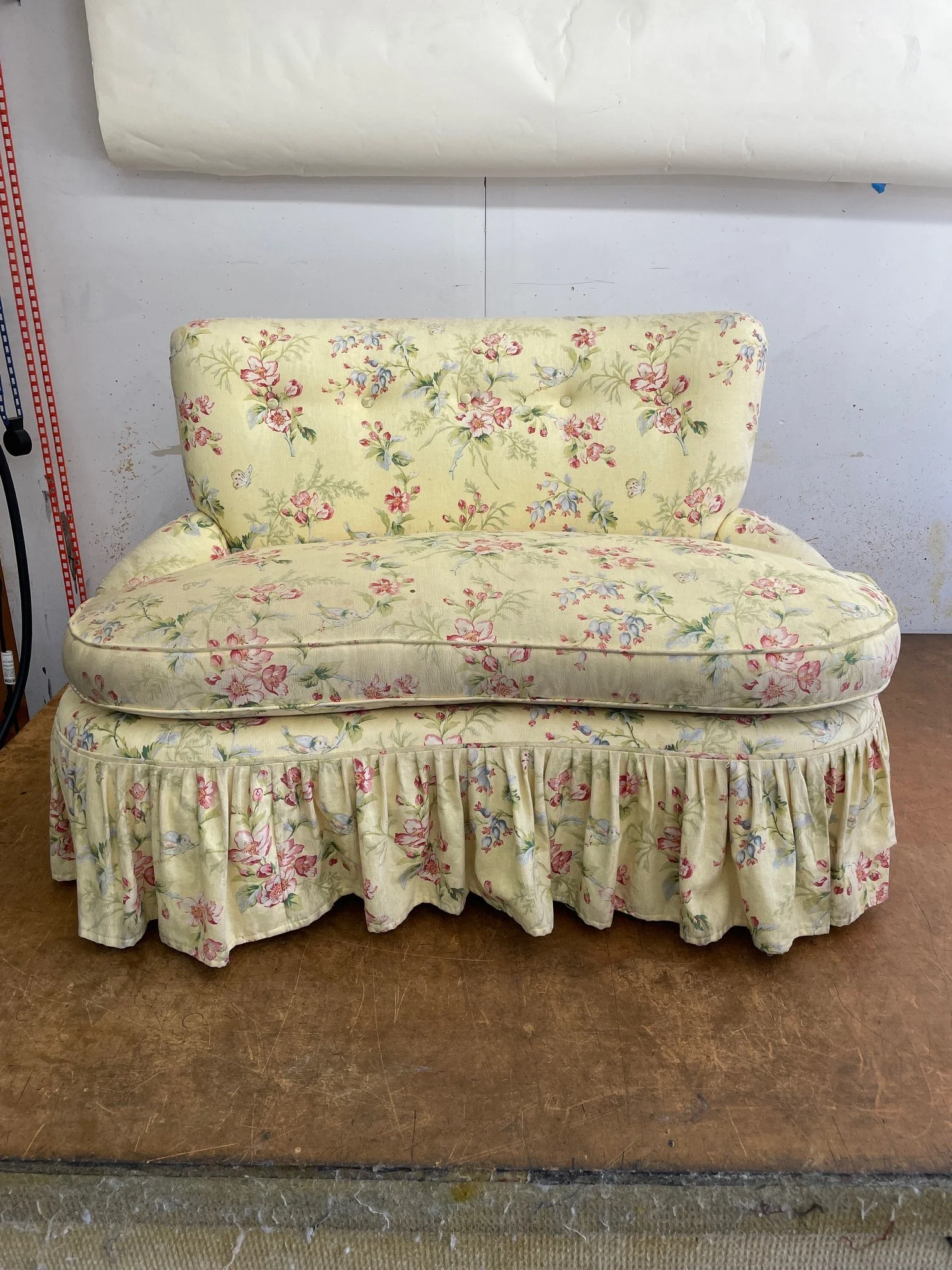
Loveseat from the 60’s. An Excellent well built frame featuring lovely skirt and outdated fabric.
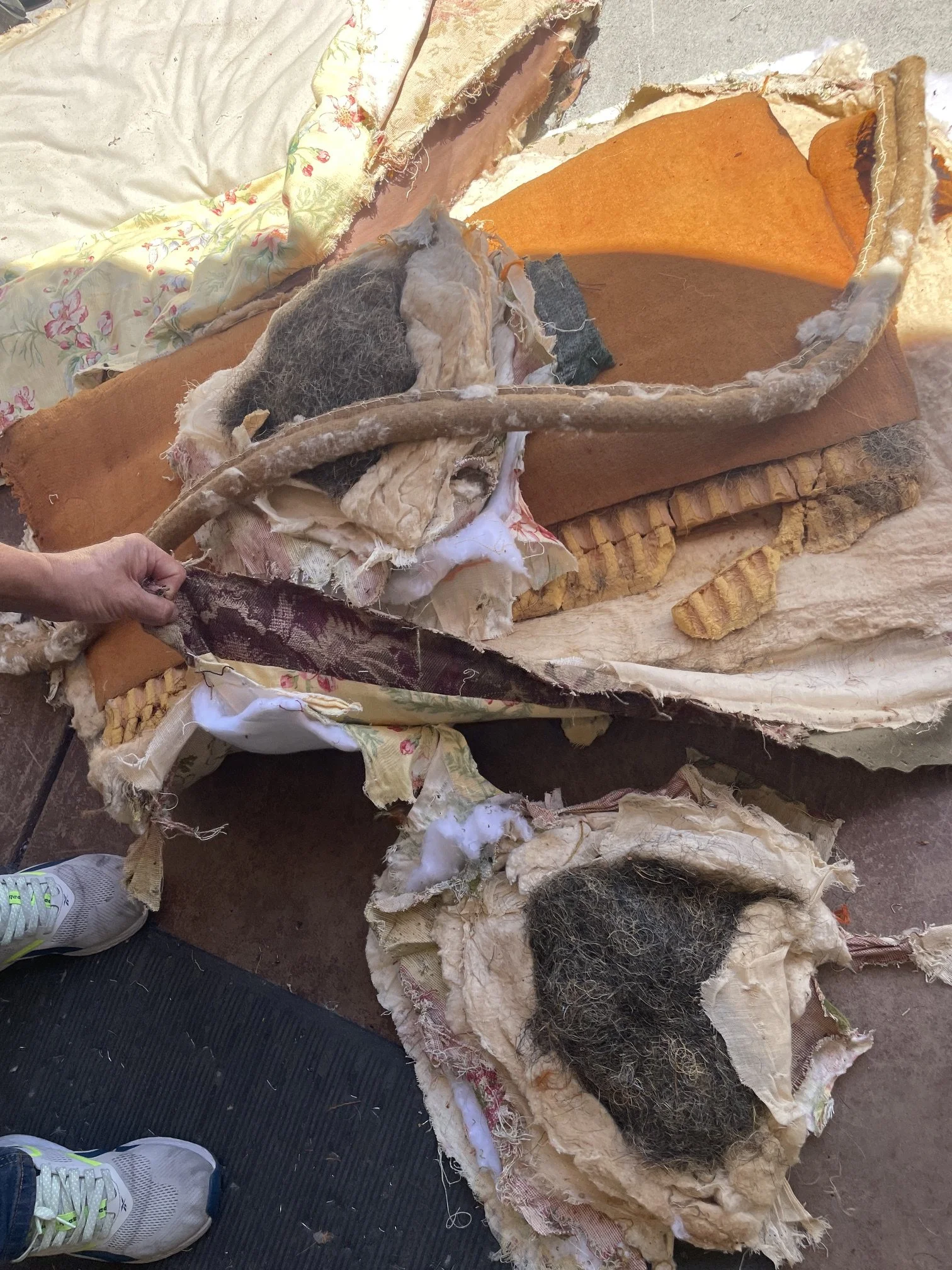
The inside fill was latex foam cotton and horsehair. This material held up for 50 years!!
Good Furniture Starts with Good Bones
One phrase you'll often hear in an upholstery shop is:
"Does it have good bones?"
Just as an architect begins with a strong foundation, upholsterers begin with the frame.
The frame determines how well the furniture supports weight, resists movement, and survives years of daily use.
A beautiful fabric cannot compensate for a weak frame.
Likewise, replacing cushions or adding decorative pillows will never solve structural problems hidden beneath the upholstery.
Whenever a piece enters our workroom, one of the first things we evaluate is whether the frame is worth preserving.
When the answer is yes, reupholstery often becomes an excellent long-term investment.
What's Hiding Beneath the Fabric?
Removing the upholstery reveals far more than wood.
Inside almost every upholstered piece are dozens of components working together.
These include:
Frame construction
Suspension system
Webbing
Springs
Foam
Dacron wrap
Cushion fills
Deck padding
Edge rolls
Corner reinforcement
Upholstery tack strips
Each component contributes to comfort, durability, and appearance.
Unfortunately, these are also the components most consumers never have the opportunity to inspect before purchasing.


Not All Foam Is Created Equal
One of the biggest surprises for homeowners is discovering how much difference cushion construction makes.
Foam is not simply "soft" or "firm."
It varies in:
Density
Resiliency
Compression
Longevity
Intended application
Lower-density foam may initially feel soft and inviting but can lose its support relatively quickly with daily use.
High-resiliency foam is engineered to maintain its shape and performance for many years while providing more consistent support.
Beyond foam, there are also numerous cushion fill options:
Down
Down blend
Feather
Polyester fiber
Poly blend
Outdoor foam
Specialty foams
Each offers a different seating experience, maintenance requirement, and lifespan.
Choosing the correct cushion construction is just as important as choosing the perfect fabric.

The Hidden Comfort System
Most people assume comfort comes from the cushions.
In reality, comfort begins much deeper.
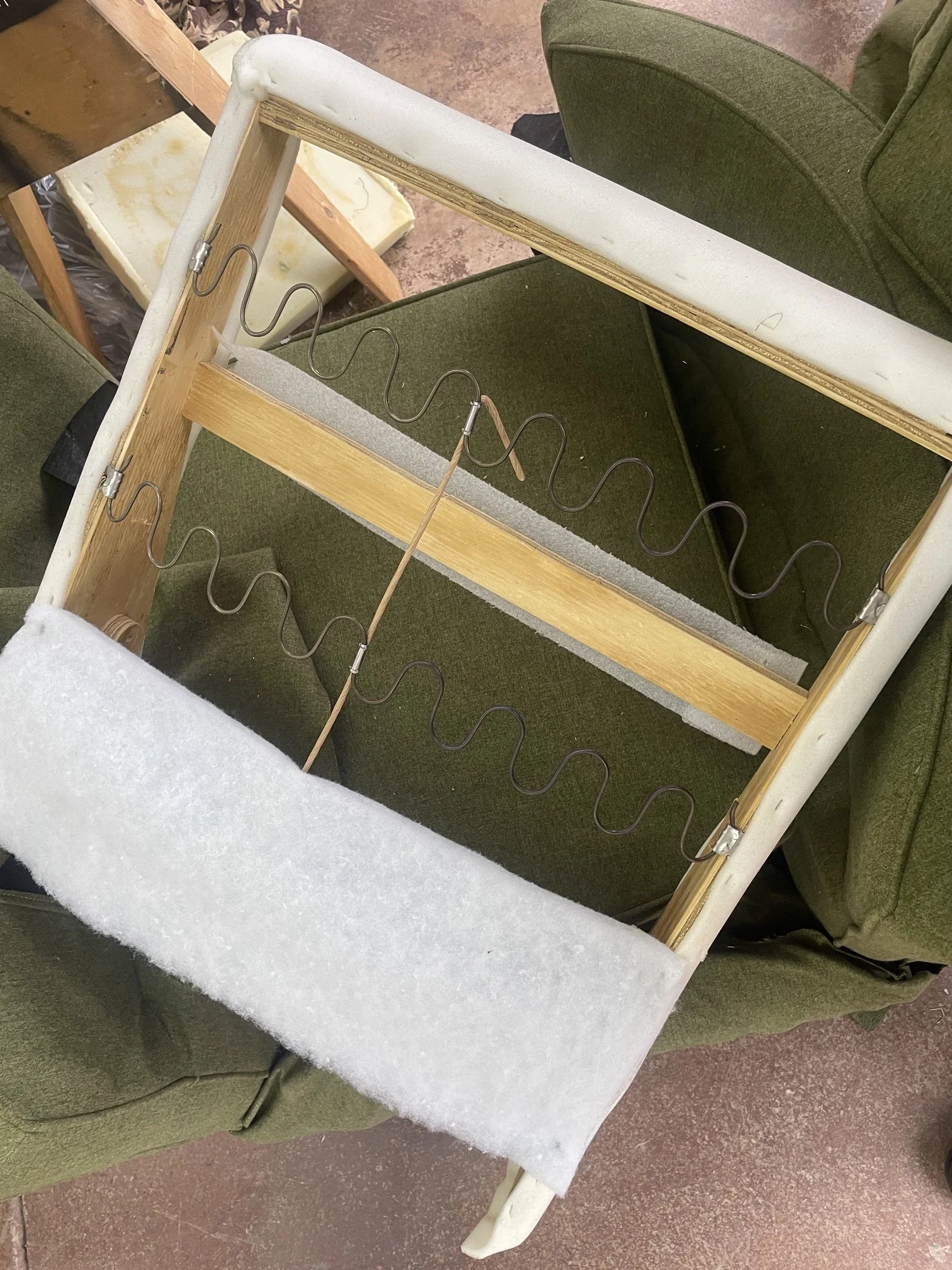
The suspension system underneath every seat absorbs weight and distributes pressure throughout the frame.
Depending on the furniture, this may include:
Eight-way hand-tied coil springs
Sinuous (no-sag) springs
Elastic webbing
Jute webbing
Specialty suspension systems
As these systems wear, furniture gradually loses support.
Fortunately, quality pieces can often be rebuilt, restoring comfort without replacing the entire piece.
Beautiful Doesn't Always Mean Practical
As designers and homeowners, it's easy to become captivated by beautiful fabrics.
But every upholstery project should begin with one important question:
How will this furniture actually be used?
A family room with young children requires different materials than a formal sitting room.
A restaurant booth has different performance requirements than a reading chair.
A vacation home experiences different wear than a primary residence.
Selecting fabrics that fit a client's lifestyle often results in furniture that looks beautiful for far longer.
Designing for Longevity
Trends are exciting.
They inspire creativity and help shape beautiful interiors.
But quality furniture should outlast trends.
When selecting upholstery, we often encourage clients to balance current inspiration with long-term practicality.
Rather than asking only:
"What looks beautiful today?" We also ask: "Will this still perform beautifully ten years from now?"
Timeless fabrics, thoughtful construction, and quality craftsmanship tend to age more gracefully than furniture selected solely around the latest trend.
Why Reupholstery Often Makes Sense
One of the greatest misconceptions about upholstery is that replacing furniture is always the better value.
In many cases, the opposite is true.
If a piece has:
A solid hardwood frame
Quality construction
Comfortable proportions
Sentimental value
Excellent craftsmanship
…it may be a far better candidate for restoration than replacement.
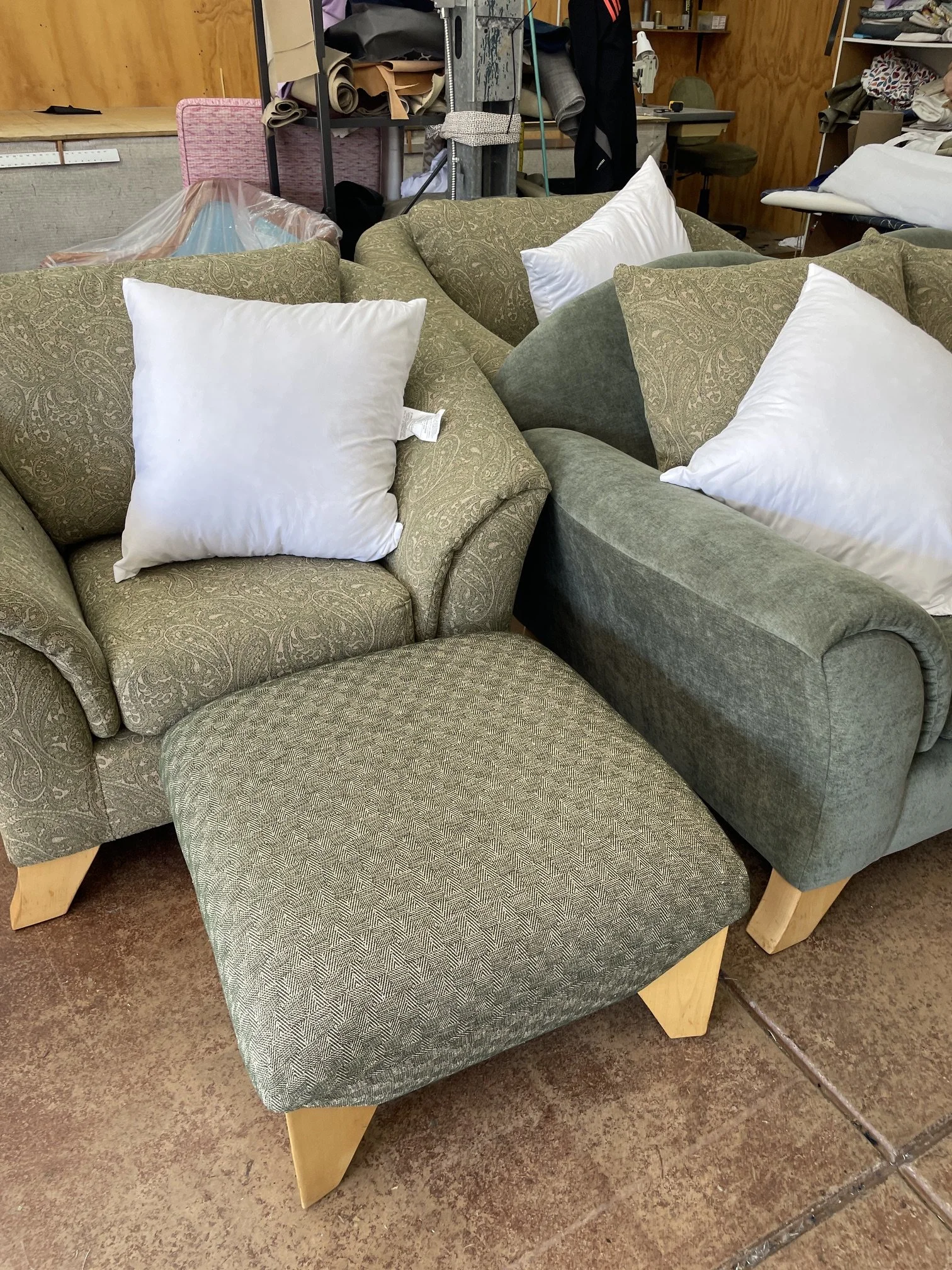
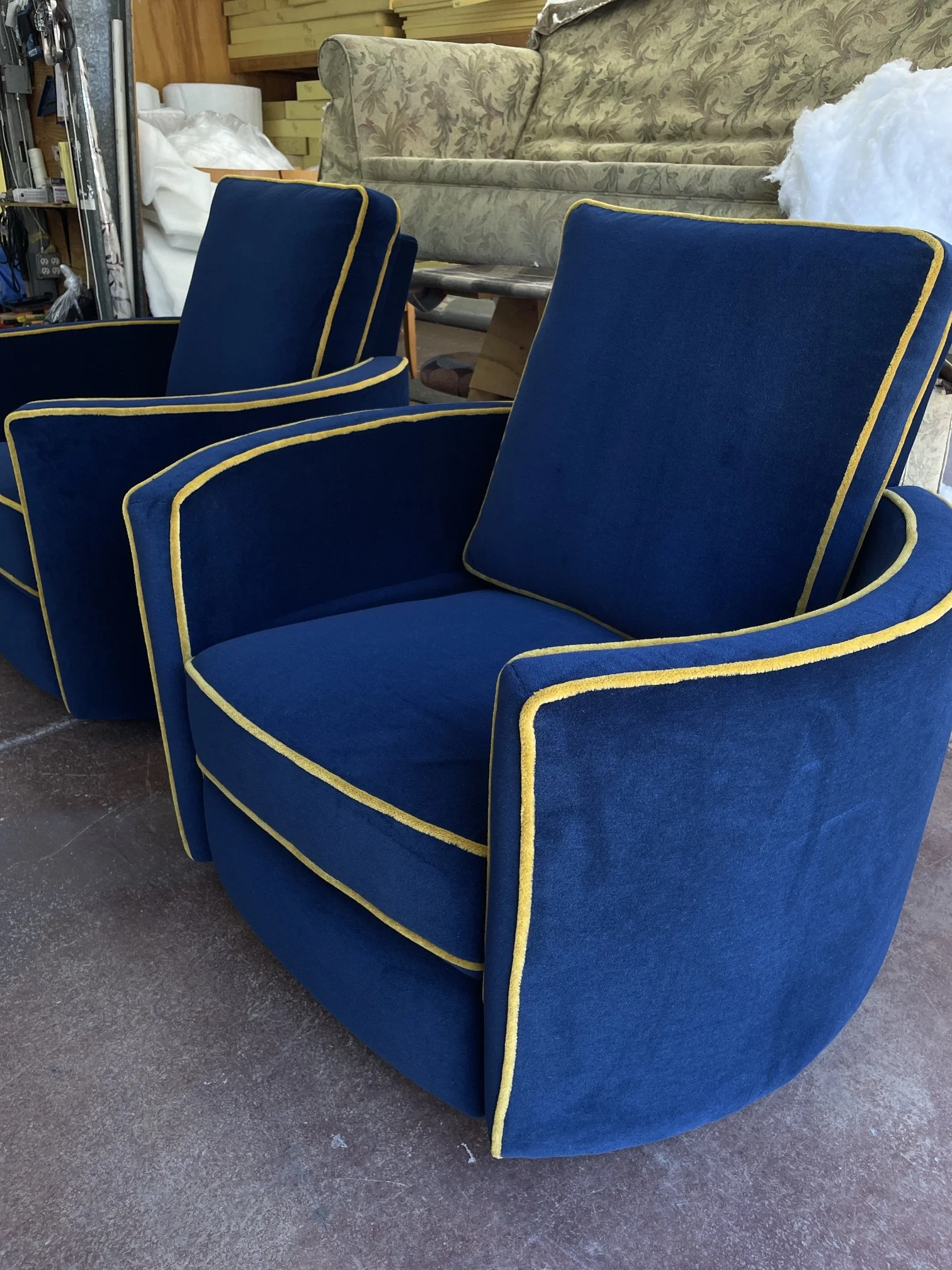
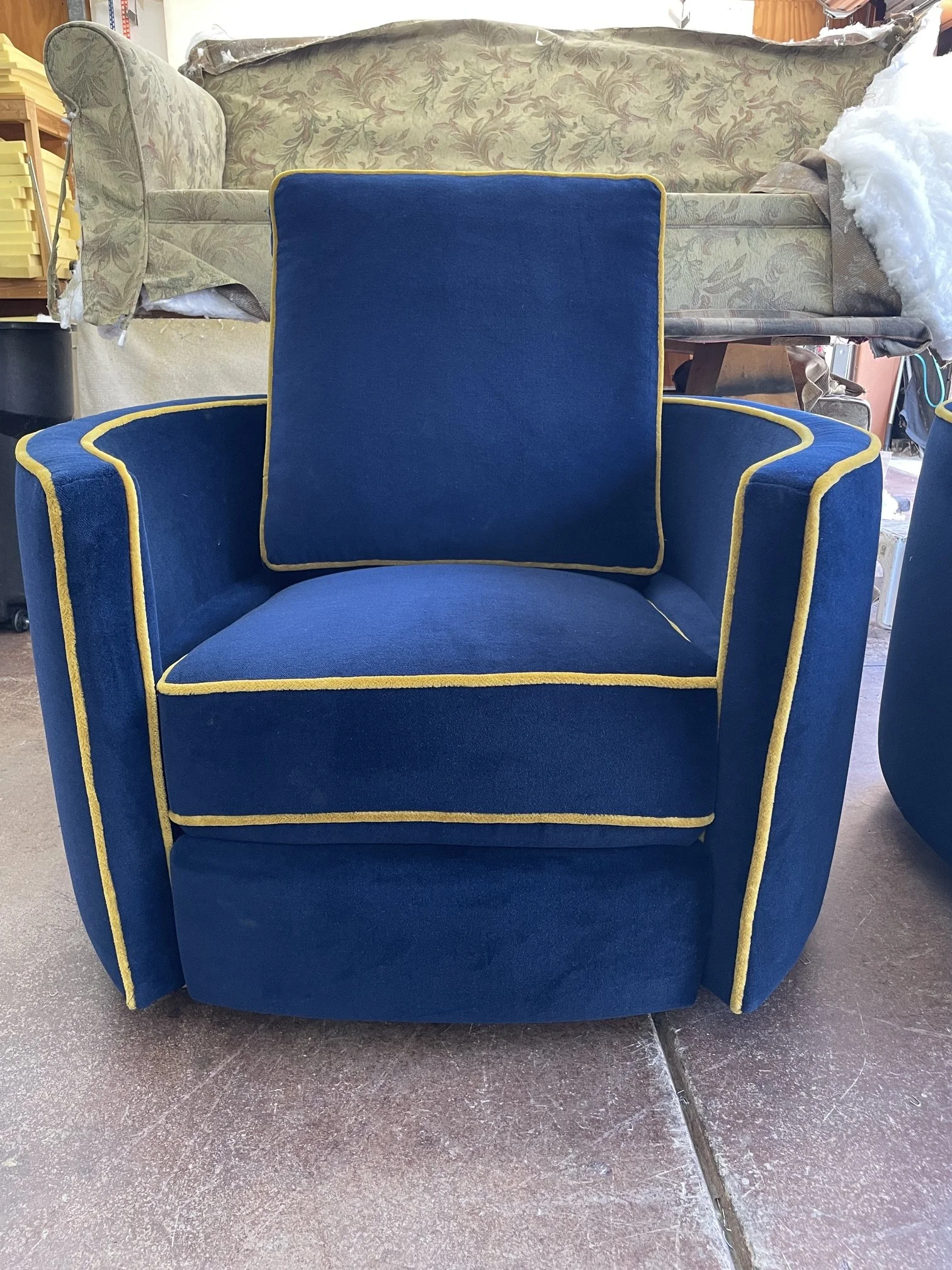
Reupholstery allows homeowners to preserve furniture built to last while selecting fabrics, cushion fills, and finishes that reflect their current style.
The result is a custom piece tailored specifically to the home and the people who live in it.
An Upholsterer's Perspective
One advantage of working with an upholsterer is that we see furniture differently.
We don't just see fabric.
We see construction.
We see craftsmanship.
We see the hidden details that determine whether a piece will continue serving a family for another twenty years—or begin failing after only a few.
Sometimes we recommend restoration.
Sometimes we recommend replacement.
Either way, our goal is the same: helping clients make informed decisions that provide lasting comfort, beauty, and value.
The Details That Matter Most
At Aby's Custom Upholstery, we believe true craftsmanship isn't found only in beautiful fabrics or perfectly tailored seams.
It's found in the things most people never see.
The frame.
The springs.
The foam.
The stitching.
The careful decisions made beneath every layer of fabric.
Because while beautiful upholstery may catch your eye, quality construction is what keeps you enjoying it for years to come.
The next time you shop for furniture, remember this:
The fabric may be what you fall in love with—but it's what's underneath that determines whether you'll still love it years from now.